
A pool cover can address several different goals, but the words solar, winter, safety and automatic do not describe the same thing. Start by deciding what you need the cover to do, then verify the exact product and installation. For a North Texas pool, cover planning should include everyday use, access protection and the way the system fits the pool and surrounding deck.
Define the job before comparing cover types
Write down your priorities: reducing evaporation, retaining heat, managing seasonal debris or adding an access-protection layer. Then ask which specific cover addresses each priority. EPA explains that consistent, appropriate cover use can reduce evaporation and help retain heat. That does not establish the safety performance of a particular product.
Compare the cover material and intended purpose separately from how it moves. Automatic describes an operating system; it is not enough by itself to establish that a cover is suitable for your safety needs. Likewise, a product marketed for winter use still needs its actual safety documentation checked.
- List the problems you want the cover to solve, in priority order.
- Identify the exact model and its documented intended uses.
- Ask what the proposed cover does not do before comparing prices.
Keep water-saving claims separate from safety requirements
EPA's residential pool guide distinguishes solar covers and liquid evaporation suppressants from safety covers. A floating solar blanket or solar ring is not a safety cover. For a proposed safety cover, ask for the exact model's applicable safety-standard documentation, installation requirements and operating instructions; do not rely on the general material name or a salesperson's description.
CPSC's Pool Safely guidance pairs safety devices with attentive adult supervision and other protective measures. No cover replaces supervision. Keep barriers, gates, alarms and the cover itself in working order, and ask the responsible professional or local authority which requirements apply to your property. This guide does not establish that a cover replaces a required fence or gate.
- Confirm the documentation applies to the complete proposed system and installation.
- Ask how the cover is secured and how condition or damage is inspected.
- Keep the household supervision and access-control plan in place.
Compare the daily handling and maintenance routine
A cover that is inconvenient to deploy may not be used as intended. Compare who will open and close it, how it is removed and stored, and whether a reel, anchors or powered equipment affect the deck. EPA's guide notes that solid and mesh covers handle precipitation differently, so ask about the selected system's water-removal and maintenance instructions.
Have the installer explain the actual operating routine and the owner manual for the selected model. Ask how the pool is checked before covering, what must happen before swimming, where controls or removable equipment are kept, and who handles servicing. Do not improvise a procedure from a different cover's instructions.
- Who can operate the system, and what demonstration will they receive?
- Where will the cover, reel or other removable equipment be stored?
- What inspections, cleaning and service tasks does the exact manual require?
Plan automatic-cover tracks and housing with the pool design
An automatic cover needs a coordinated layout. Cover-Pools describes under-coping track arrangements for many new rectangular gunite pools and says provisions must be made before construction. Review the track location, cover mechanism, housing access and adjacent deck or coping details before those elements are finalized. A retrofit needs its own assessment rather than an assumption that concealed tracks can simply be added later.
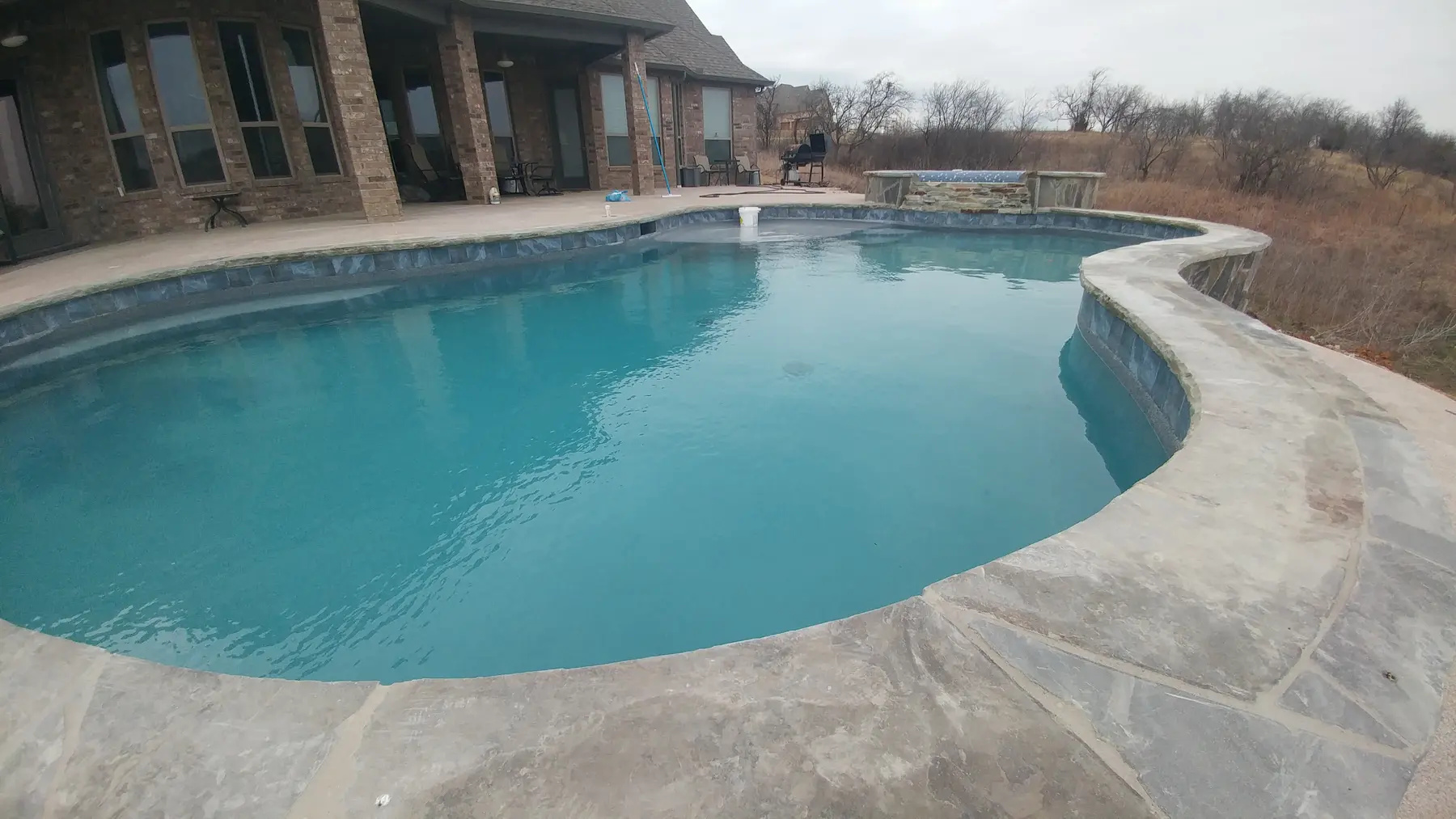
A freeform pool is not automatically excluded, but it also is not automatically compatible. Cover-Pools describes specific freeform and special-shape construction approaches. Those manufacturer examples are not a fit guarantee for your pool. Have the proposed system reviewed against the measured shape, raised spa, walls, steps, water features and surrounding space. The King Pools photo here shows an uncovered pool for design context, not a cover installation or verified cover compatibility.
- Show the exact track and housing positions on the proposed layout.
- Identify needed deck, coping, drainage, electrical and service-access coordination with the installer.
- Confirm which features or future changes could interfere with the selected system.
Record the exact system and responsibilities before ordering
Keep the manufacturer, model, measured coverage, track or anchor arrangement, included work, exclusions and applicable safety documentation together. Ask who supplies, installs, commissions and services each component, and what demonstration and owner records you will receive. Product examples in this article do not establish that King Pools supplies every brand or that a listed system is suitable for your property.
EPA states that it did not proceed with a WaterSense product specification for pool covers. Do not treat an evaporation claim as WaterSense certification. Ask for product-specific performance information and a project-specific scope instead of assuming a universal water, energy or dollar saving. Bring the cover question into your pool design or remodeling conversation early enough to resolve it before materials are ordered.
- Confirm exact product availability, compatibility and any required design changes.
- Record the applicable warranty, maintenance requirements and support contacts.
- Resolve substitutions and changes in writing before installation.
Common questions
Frequently asked questions
Is a solar blanket a safety cover?
No. EPA distinguishes floating solar covers from safety covers. Choose a safety system using its exact documentation and installation requirements, while preserving supervision and other access-protection measures.
Does automatic mean the cover meets my safety requirements?
The operating method alone does not answer that question. Verify the exact model, applicable safety documentation, installation and owner instructions with the qualified installer and relevant authority.
Can an automatic cover work with a freeform pool?
Some manufacturer systems support specific freeform layouts, but the measured pool and complete design must be reviewed. Tracks, housing, deck details, raised features and access can affect the proposed solution.
Are pool covers WaterSense certified?
EPA says it did not move forward with a WaterSense specification for pool covers. Its water-efficiency guidance should not be presented as a WaterSense label for a particular cover.
When should I discuss a cover for a new pool?
During design, before coping and deck details are finalized. Ask for the proposed cover layout, compatibility review and clear installation and maintenance responsibilities.
Next step
Raise the cover question during pool planning
Discuss your pool plans with King Pools and ask how a proposed cover system would affect the layout, coping, deck and coordination with a qualified cover installer.